In-Depth Conversations
Not interviews. Deep dives.
We explore how leading technologists, professors, and builders actually think—the tradeoffs they face, the systems they design, and the decisions shaping the future of work.
Discover the stories and strategies of AI and automation pioneers redefining innovation—learn how to apply them as a founder, operator, builder, or investor.
Loading the podcast archive…



AI is moving into the systems that run companies, institutions, and everyday life. We follow the people building that shift — and ask what their work means for human agency, work, and the future we still have time to shape.
Not interviews. Deep dives.
We explore how leading technologists, professors, and builders actually think—the tradeoffs they face, the systems they design, and the decisions shaping the future of work.
Beyond origin stories.
We unpack the real journeys behind enduring companies—how founders navigated uncertainty, scaled systems, made irreversible decisions, and learned what actually matters over time.

Automation isn’t coming. It’s already here.
From finance and law to healthcare and science, intelligent systems are reshaping how work is done—often invisibly. We explore what this means for productivity, new roles, human leverage, and the next generation of builders.
 46:33
Baris Gultekin — VP of AI at Snowflake and co-creator of Google Now — joins Alp Uguray to unpack why the next era of AI won't be defined by better models, but by where intelligence lives relative to data. From the hard lessons of Google Assistant's brittle architecture to Snowflake's "bring AI to the data" thesis, Baris explains why trust, governance, and semantic understanding are the real unlock for enterprise agents. They explore how skills — modular instructions that agents load on-demand like Neo learning karate in The Matrix — are replacing traditional applications, how agent-to-agent protocols like MCP are reshaping the enterprise stack, and why the pie is growing so fast that the entire AI economy is lifting all boats.
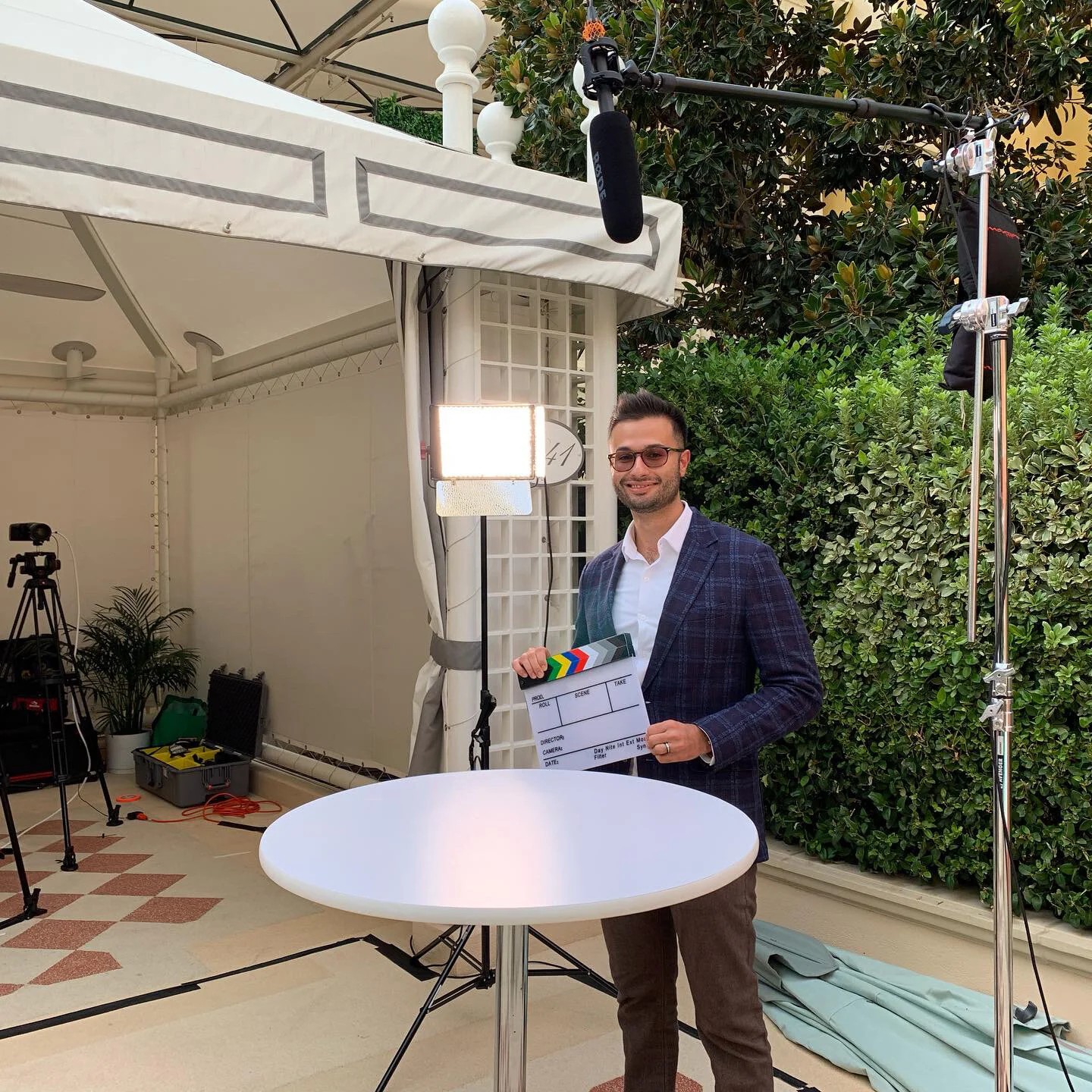
Follow along with our host, Alp Uguray as he discusses a broad range of topics and interviews the top leaders in the future of work and artificial intelligence space.
Learn more 1:02:33
In this episode of Masters of Automation, Alp Uguray sits down with Ben Katz, co-founder of Hybrd and former growth product manager at Whoop, to explore what happens when a lifelong athlete turns a personal frustration into a Y Combinator-backed AI fitness platform — and why the rules of building a startup have fundamentally changed. Ben's path is anything but linear. He started in sales, moved into analytics at Wayfair, spent years trying to break into product management, and eventually landed at Whoop — where he found the rare intersection of passion, craft, and career. After a stint at Apex, a mobile app portfolio company, he realized the founders he was evaluating weren't smarter than he was — they just had the agency to start. That was the push. Together with three co-founders — including a U.S. national rowing team member, a former Whoop analytics lead, and a senior AWS engineer who also happens to be a former U.S. national rugby player — Ben launched HYBRD on a plane to San Francisco, writing the first line of code en route to Y Combinator. The conversation opens with Ben's unconventional career arc — what he calls "getting an MBA by doing" — and how sales became the most underrated founder skill. From there, Alp and Ben trace the development of HYBRD: from the initial hypothesis that serious athletes don't want an app telling them what to do (which turned out to be wrong), to the breakthrough of invite-only user acquisition, to the science-backed training plan engine built in partnership with the University of Utah and Complete Human Performance, the company founded by Alex Viada — the man who literally wrote the book on HYBRD athletic training.…
Listen Now 1:28:03
In this episode of Masters of Automation, Alp Uguray sits down with MIT Professor Ramesh Raskar to explore a future where AI shifts from centralized “foundries” (massive cloud models) to a world of personal, edge-based agents that we own, customize, and connect—an Internet of AI Agents (see Project NANDA). Raskar traces his journey from a small town near Nashik—where curiosity and constraint shaped his mindset—to being inspired by Jurassic Park, then “waking up” to the power of storytelling and human realism through South Park, which ultimately pulled him from computer graphics into machine learning and systems thinking. From there, the conversation dives into his core thesis: the next frontier isn’t bigger models—it’s AI that’s closer to your data, your context, and your control. They unpack the idea of Agent Zero (a private AI agent for every person), how agents might evolve through foundations → commerce → societies, and why the next big economic layer may be agent teaming/orchestration rather than models or apps. They also confront the two diverging futures: a “quiet dystopia” dominated by a few agent stores versus a “green curve” world of billions of micro-AIs empowering global creativity and shared prosperity. The episode closes with Project NANDA—Raskar’s effort to build core infrastructure for trust, naming, certification, interoperability, and ongoing attestation in an open agentic ecosystem (open-source repo, research paper). Guest Bio Professor Ramesh Raskar is an MIT professor and researcher known for building ambitious, system-level technologies spanning computer vision, machine learning, human-computer interaction, and decentralized AI.…
Listen Now 47:55
In this episode of the Masters of Automation podcast, host Alp Uguray interviews Maxime Labonne, discussing the challenges and innovations in running large language models (LLMs) on edge devices. They explore the importance of post-training techniques for enhancing small models, the future of local AI models, and the integration of AI into everyday applications. The conversation also touches on the role of context in AI performance, architectural considerations, and the dual paths of AI development. Maxim shares his journey from cybersecurity to AI, the use of AI in spam detection, and the potential of agent-to-agent communication. The episode concludes with insights on the future of AI in gaming and the importance of community in AI development. Takeaways Running LLMs on edge devices presents challenges like latency and model quality. Post-training techniques are crucial for enhancing small models' performance. Local AI models can provide privacy and customization for users. Agentic workflows can enhance AI's functionality in applications. Context windows are vital for AI reasoning and performance. Model architecture significantly impacts AI capabilities and efficiency. There are two paths in AI development: AGI and interpretable models. Maxime transitioned from cybersecurity to AI due to the open community. AI can be effectively used in cybersecurity for spam detection. Agent-to-agent communication in AI is still in its infancy.
Listen Now 1:02:33
In this conversation, Alp Uguray hosts Stephen Wolfram to discuss the intersection of computation, AI, and human intelligence. They explore the differences between large language models and formal computation, the concept of the Ruliad, and the limitations of AI in understanding complex mathematical proofs. The discussion also delves into the future of AI, the nature of communication and knowledge transfer among AI systems, and the implications of computational processes in the natural world. In this conversation, Stephen Wolfram discusses the nature of sensory data in AI, the implications of quantum mechanics on human cognition, and the future of education with a focus on computational thinking. He emphasizes the importance of foundational understanding in entrepreneurship and the need for adaptability in business. The discussion highlights the evolving landscape of technology and education, advocating for a shift from specialized skills to a more generalized approach to learning and thinking.
Listen Now